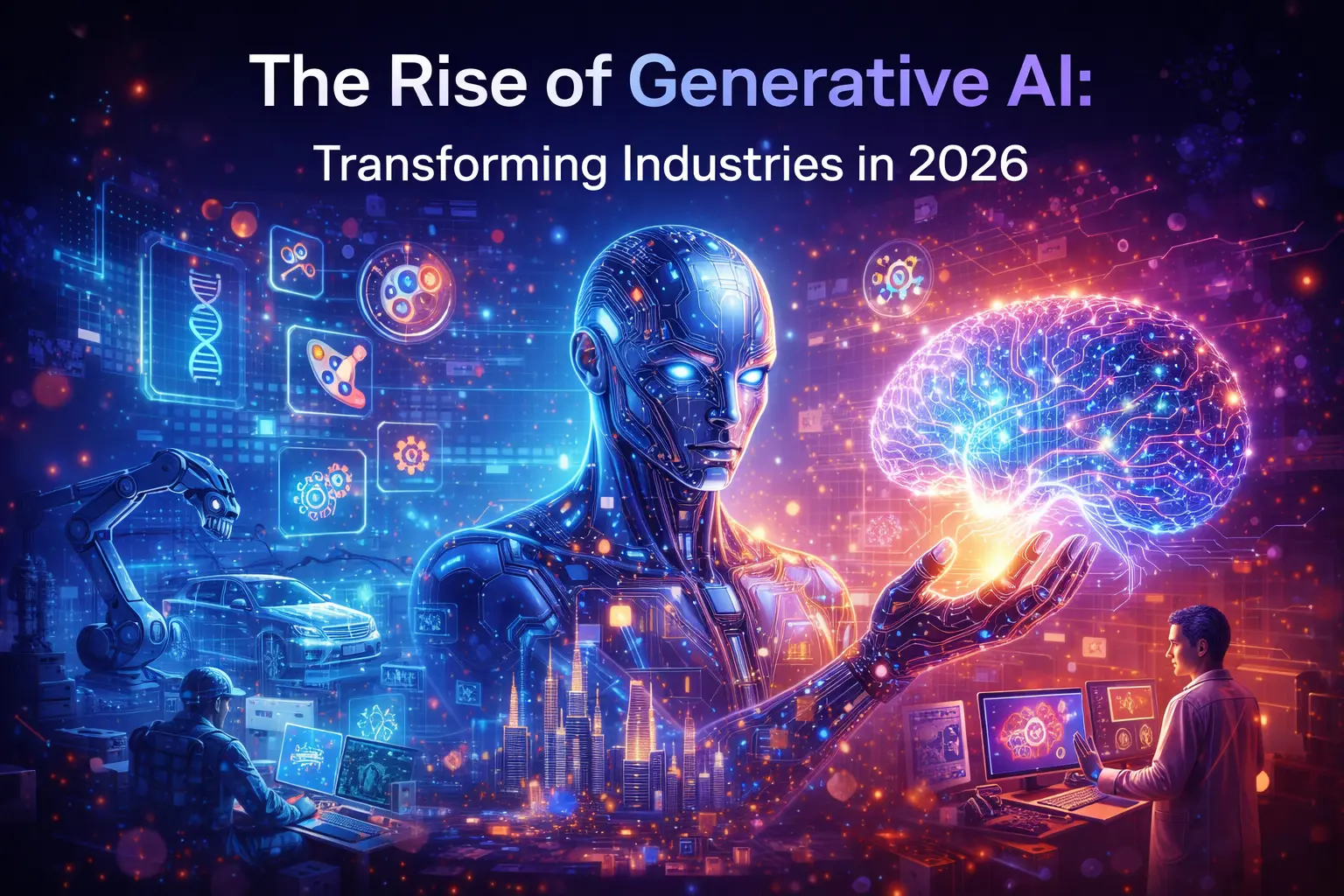
Introduction
Generative AI has moved far beyond the realm of research labs and into the fabric of everyday business operations. From drafting marketing copy to designing complex architectural blueprints, AI models are proving that machine-generated content can rival—and sometimes surpass—human output in both speed and quality.
What is Generative AI?
Generative AI refers to a class of artificial intelligence models capable of creating new content—text, images, audio, video, and code—by learning patterns from vast training datasets. The most prominent examples include Large Language Models (LLMs) such as GPT-4, Gemini, and Claude, as well as image generators like Midjourney and DALL-E.
Industries Being Transformed
- Healthcare: AI generates detailed radiology reports, drug compound predictions, and personalized treatment plans.
- Finance: Automated report generation, fraud pattern simulation, and risk modelling are now AI-driven.
- Education: Adaptive learning platforms create personalized curricula tailored to each student's pace and style.
- Entertainment: Game studios use generative AI to build worlds, write dialogue, and compose soundtracks in a fraction of the traditional time.
- Software Development: AI coding assistants like GitHub Copilot are accelerating development cycles by auto-completing functions and detecting bugs in real time.
Challenges and Ethical Considerations
Despite its enormous potential, generative AI raises critical concerns around misinformation, intellectual property rights, and bias in training data. Responsible deployment demands transparent governance frameworks, rigorous model auditing, and human oversight at every stage of content creation.
Looking Ahead
The generative AI market is projected to surpass $1 trillion by 2030. Companies that embrace this technology early—while building ethical guardrails—will secure a decisive competitive advantage. The question is no longer whether to adopt generative AI, but how to do so responsibly and strategically.