What is DeFi?
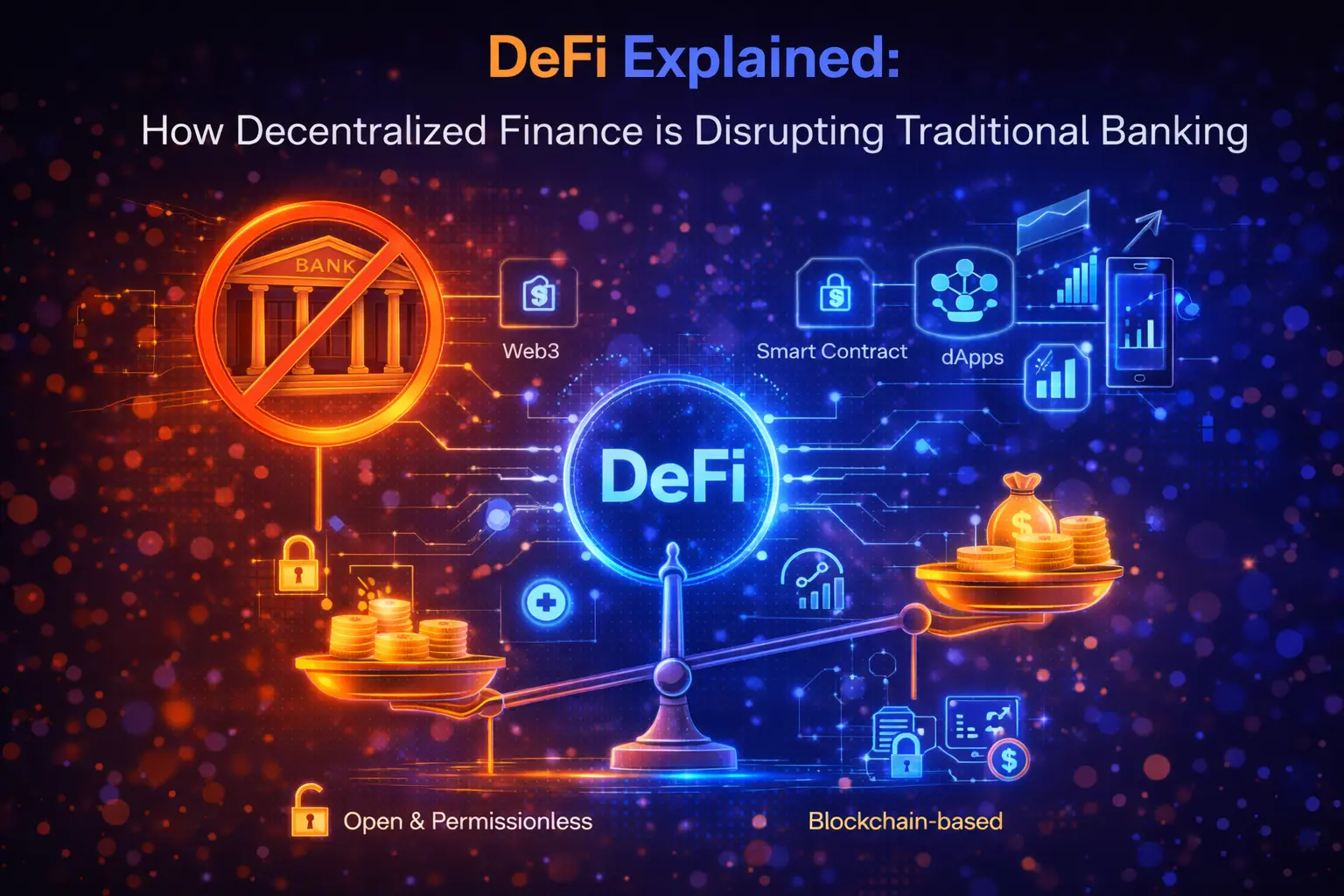
Decentralized Finance (DeFi) refers to a suite of financial services—lending, borrowing, trading, earning interest—built on public blockchains (primarily Ethereum) and governed by smart contracts rather than banks or financial institutions. DeFi is open to anyone with an internet connection, operating 24/7 without human intermediaries.
Core DeFi Concepts
- Decentralized Exchanges (DEXs): Platforms like Uniswap allow peer-to-peer token swaps without a centralized order book.
- Lending & Borrowing: Protocols like Aave and Compound allow users to earn interest on crypto deposits or take out collateralized loans instantly.
- Yield Farming & Liquidity Mining: Users provide liquidity to protocols in exchange for token rewards and interest income.
- Stablecoins: Algorithmic or collateral-backed stablecoins like DAI maintain price stability for reliable transactions.
- Synthetic Assets: Platforms like Synthetix let users gain exposure to real-world assets (stocks, commodities) on-chain.
DeFi vs Traditional Finance
Traditional banking relies on trusted intermediaries, business hours, geographic restrictions, and lengthy approval processes. DeFi eliminates these barriers. Anyone—anywhere in the world—can access sophisticated financial instruments without a bank account, credit check, or KYC process.
Risks of DeFi
- Smart Contract Vulnerabilities: Bugs in code can lead to massive exploits and fund losses.
- Regulatory Uncertainty: Governments worldwide are still formulating DeFi regulations.
- Impermanent Loss: Liquidity providers can lose value compared to simply holding assets.
- Market Volatility: Crypto collateral can be liquidated rapidly during market downturns.
The Future of DeFi
As blockchain infrastructure matures—with faster, cheaper Layer-2 networks like Arbitrum and Optimism—DeFi is becoming increasingly accessible. Institutional adoption, cross-chain interoperability, and regulatory clarity will be the key drivers of DeFi's next growth phase. The total value locked (TVL) in DeFi protocols is expected to exceed $500 billion by 2028.